When Rinny Ryan arrived in Naples around 1990, she knew of exactly one other working potter in the entire region. That single figure - one she still cites when describing the distance the local ceramics scene has traveled - is the most useful starting point for understanding what Southwest Florida's clay community has become. Today the region has a chartered potters guild with roughly 80 members, teaching studios in Naples, Bonita Springs, Cape Coral, and Marco Island, open-studio ceramic artists in the Naples Art District, a museum exhibition built on a major private donation of ceramics and glass, and a January fundraiser that puts more than 1,500 handmade bowls into public hands in a single afternoon. This guide maps the full landscape - from Punta Gorda to Marco Island - for collectors, students, and visitors who want to find the work, take a class, or understand what they are looking at when they pick up a pot at a Saturday market.
How Ceramics Took Root Here
Ryan's lone companion potter in 1990 was not just sparse company - it was an accurate census. Southwest Florida's cultural infrastructure was younger then, its population thinner, and its geography does not naturally concentrate arts communities the way a city built around an art school does. The Everglades press against the eastern edge of Collier County, the Gulf defines the western one, and the flat coastal terrain between them does not generate the walkable density that feeds urban ceramics neighborhoods in places like Asheville or Seagrove, North Carolina.
What changed things was cumulative rather than sudden. Naples grew into one of Florida's wealthiest residential markets, bringing with it the collector base that sustains studio work. Teaching studios opened when demand for leisure arts instruction reached a sustainable threshold. The Naples Art District formalized a zone where working artists could afford ground-floor space with kilns and loading access. And individual potters with genuine training and the patience for isolation stayed, built reputations, and became the infrastructure others could lean on.
Ryan's own formation shows what that serious end looked like. She earned a BA in ceramics from the University of Miami and went on to graduate studies at Antioch College, the Maryland Institute of Art, and the Penland School of Crafts - a lineage that put her in contact with the national craft tradition before she settled on the edge of the Everglades. She later taught ceramics at Edison College and Florida Gulf Coast University, which means a portion of the active working potters in the region today passed through her classroom. The landscape she works within has shaped what she and others make: her cedar-and-cypress studio sits on the Everglades' edge, and the slip-decorated folk art stoneware and earthenware she produces draws from the natural tones and organic imagery of that specific terrain. The coastal light, the subtropical palette, and the seasonal rhythm of a community that swells with northern visitors from fall through spring have all influenced what local potters make and who buys it.
![BIRD SONG BY MICHELE HANNAN [SCULPTURE IN CONTEXT 2015]-10805406](/img/ceramics-pottery-southwest-florida-2.jpg)
The SWFL Potters Guild: Punta Gorda as the Regional Hub
The Southwest Florida Potters Guild was incorporated as a Florida non-profit on February 17, 2023, with Raymond J. McClennen as founding president. Within fewer than three years it had grown to roughly 80 members - a number that confirms the regional ceramics community had reached the density where formal organization made sense, and where the question was no longer whether a guild could survive but how far its reach would extend.
The guild's home is the Quednau/Hindman House - the yellow house, as it is known locally - inside Punta Gorda History Park. Its gallery is open every Sunday from 9am to 1pm during the park's Art Market, which runs year-round. That weekly schedule matters more than it might seem: most ceramics organizations depend on seasonal fairs or irregular exhibition cycles for their public presence. The guild has a consistent, recurring point of contact with buyers, which is a structural advantage that takes years to build.
What separates the SWFL Potters Guild from a casual clay circle is the combination of physical space, shared equipment, and organizational accountability behind the membership:
- A dedicated gallery inside an established cultural venue, open weekly to the public
- Access to shared kilns and studio equipment across the membership
- A chartered non-profit structure with officers, bylaws, and elections
- A regional draw that pulls potters from Collier, Lee, and Charlotte Counties
- A Sunday market embedded in a year-round program, not a pop-up with no follow-through
For collectors, the History Park market is the most reliable recurring opportunity in the region to meet working potters, handle work before buying, and buy directly without a gallery intermediary. For potters considering membership, the combination of shared firing equipment and a standing sales venue removes two of the biggest practical obstacles to working outside a major city.
Teaching Studios Across the Region
The teaching studio landscape has grown to the point where a student can find instruction across most of the region, with real differences in format, focus, and who each venue suits best.
| Studio | Location | Primary offering | Best suited for |
|---|---|---|---|
| Clay More Ceramics | Naples | Wheel-throwing and hand-building classes; authorized Skutt kiln dealer; Tuesday-Sunday | Students wanting structured instruction and potters shopping for equipment |
| The Clay Place | Naples | Functional production pottery: cups, pool tiles, garden decor | Buyers drawn to everyday-use pieces; students interested in production methods |
| Arts Bonita | Bonita Springs | Open-studio clay sessions, minimum three hours, included in membership | Working potters who need kiln time and bench space more than classroom instruction |
| The Bent Brush | Cape Coral | Wheel-throwing, hand-built sculpting, paint-your-own, fused glass, mosaic | Beginners and mixed groups; voted Best of Cape Coral 2025 |
| Marco Island Center for the Arts | Marco Island | Pottery-wheel and hand-building classes for adults and children year-round | Families, seasonal visitors, and children looking for a focused short course |
Clay More Ceramics carries a distinction worth noting beyond its class schedule: as the region's authorized Skutt kiln distributor, it gives serious students and working potters a local source for equipment rather than ordering remotely without hands-on guidance. The Clay Place operates differently - less a teaching studio than a working production shop whose output includes functional objects with real regional applications, including pool tiles and garden pieces suited to the outdoor lifestyle here.
Arts Bonita's open-studio model is the most unusual in the region. Membership buys access to studio time - sessions run at least three hours, at no additional cost - rather than scheduled instruction. That format serves a working potter who needs reliable kiln access more than it serves a complete beginner, and it reflects a programming philosophy focused on sustained practice over one-off workshops.
Ceramic Artists in the Naples Art District
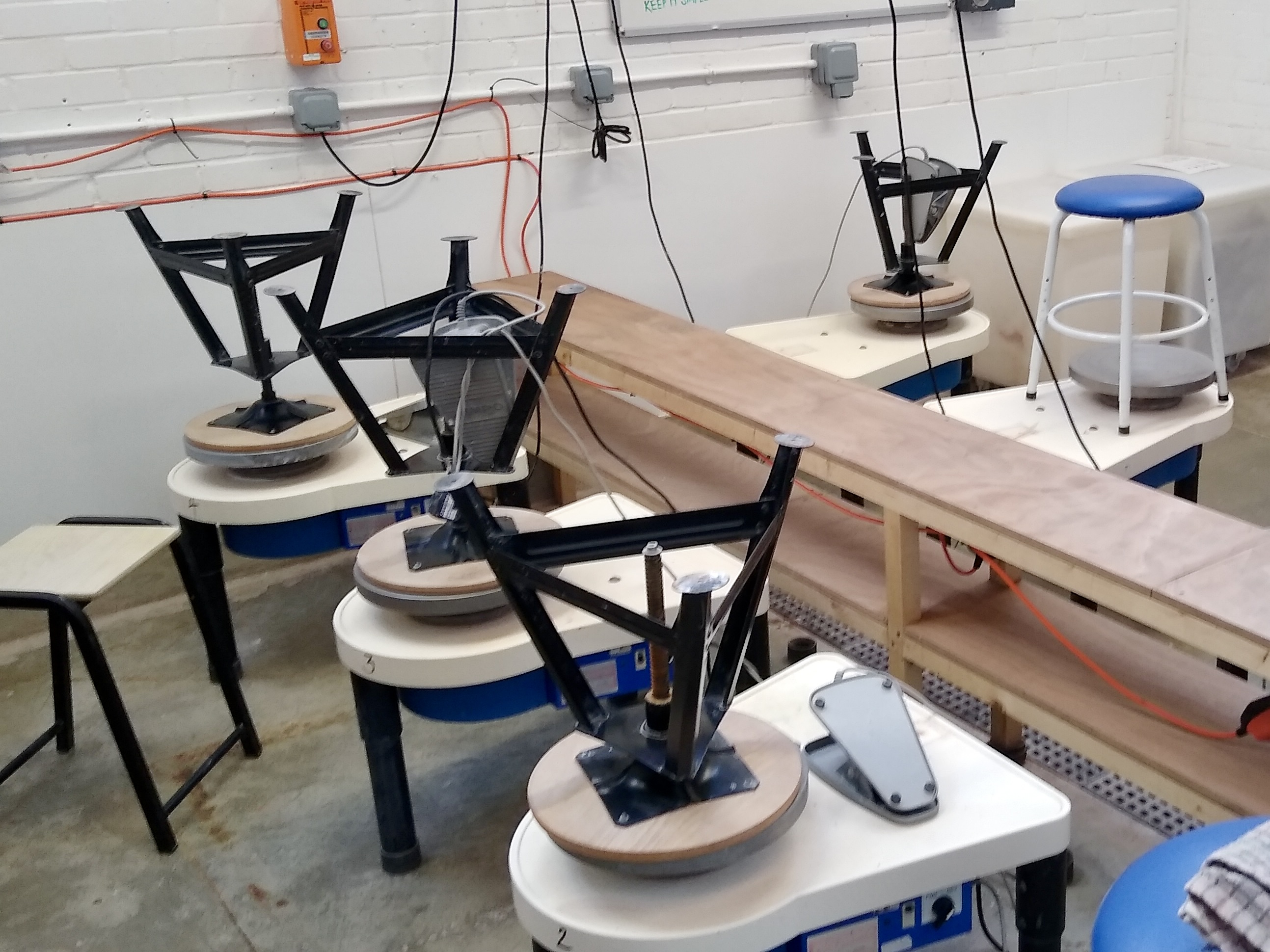
The Naples Art District operates on an open-studio model: artists maintain working studios in a concentrated zone and those spaces are periodically open to visitors, both by appointment and during organized open-studio events. For ceramic artists specifically, this is a better arrangement than gallery representation in one important respect - a collector can watch a potter at the wheel, see raw and finished work in the same space, ask questions that a gallery wall cannot answer, and buy directly without a commission cutting into what the artist receives.
The District's documented ceramic artists include Joan Eshkenazi, Brenda McDonald, Arturo Samaniego, Anika Savage, and Sara Wilson. Five working ceramicists in a single district is not a ceramics colony on the scale of established craft centers, but in a market that had effectively no working potters thirty years ago, it represents a real concentration of studio practice. What each brings to the work varies - medium, surface treatment, form language, firing approach - and visiting during an open-studio event gives buyers the direct access to process that distinguishes this model from a retail gallery.
The practical distinction between what you find here and what you find at a market booth matters:
- Each piece is made by hand, typically one at a time, in a process the artist controls from clay body through glaze to firing
- Variation between pieces is inherent and intentional, not a quality control failure
- Commission work is often possible - a specific form, a glaze color, a set of dinner pieces - because you have direct access to the maker
- The artist can speak to every decision in the object: why that clay body, why that firing temperature, what the surface treatment is doing
Independent Potters and How to Find Their Work
Some of the region's most serious ceramicists maintain a minimal online presence and are best found through markets, word of mouth, and knowing which festivals to attend. This is not accidental - it reflects the working rhythms of potters who are in the studio rather than in front of a screen.
Rinny Ryan is the clearest example. Working from her Everglades-edge studio in a building of cedar and cypress, she produces slip-decorated folk art stoneware and earthenware that draws on the natural world around her. Her work does not move primarily through social media or a regularly updated website. Finding it means knowing the local market circuit - or attending Empty Bowls Naples in January, where her bowls appear by the hundreds.
Alice Bonilha represents a different path. A native Brazilian ceramicist with decades of experience, she arrived in Naples roughly five years ago and now sells earth-toned stencil-glazed ceramics through Naples ArtCrafters at the Art in the Park events in Downtown Naples. Her work reflects both her Brazilian training and the warm palette of her adopted region - a combination that stands apart from the generic coastal aesthetic that saturates craft markets here. Finding her means knowing that Art in the Park is where Naples ArtCrafters members show, and showing up.
The recurring markets where independent potters are most likely to appear include:
- Art in the Park in Downtown Naples - where Naples ArtCrafters members including Bonilha sell regularly throughout the season
- The Sunday Art Market at Punta Gorda History Park - the guild's weekly public presence, year-round
- Seasonal fine arts festivals across Lee and Collier Counties - where working potters often appear without advance online notice
The SWFL Potters Guild is the single most useful resource for tracking who is working in the region and where to find them. Many of the area's most experienced potters do not maintain websites, do not sell through online platforms, and do not post consistently to social media. Getting on the guild's mailing list and attending the Sunday market at History Park is a more reliable strategy than searching online.
Empty Bowls Naples: Ceramics as Civic Practice
Empty Bowls Naples held its 20th annual event on January 17, 2026, at Cambier Park in downtown Naples. The format is straightforward: attendees pay an entry fee, choose a handmade ceramic bowl from the available selection, receive a simple meal of soup and bread, keep the bowl, and the proceeds fund a grant program supporting non-profits that serve food-insecure residents across Collier and Lee Counties. But the logistics behind that simplicity reveal something significant about the depth of the local ceramics community.
The event was founded by art teacher Donna Torrance and her students at Barron Collier High School, modeled on the international Empty Bowls concept that itself originated in 1990 with a Michigan high school art class. Over twenty years in Naples it has grown into one of the largest events of its kind in Florida, raising substantial funds each year for its grant program. (For current entry fees and grant details, check the Empty Bowls Naples website directly - figures are updated annually.)
The ceramics dimension is what matters most for anyone mapping the local scene. Rinny Ryan alone throws roughly 1,500 bowls per year specifically for the event. That is a production commitment requiring a dedicated annual workflow built around a single civic deadline. Multiply her output by the other contributing potters - the event draws from the regional clay community broadly - and Empty Bowls Naples becomes the largest single ceramics production event in Southwest Florida. It is also the event that makes the most working potters visible in a single place.
The region's ceramics scene grew from a single known practitioner in 1990 to a guild, a museum collection, and a civic fundraiser that mobilizes working potters at scale - all within one generation of studio practice.
To participate as a buyer, arrive at Cambier Park on the day of the event, pay the entry fee at the gate, and choose a bowl from what is available. Bowls range from the purely functional to the elaborately decorated, and no two are identical. Volunteer roles - setup, serving, bowl display - typically require advance registration through the event's organizing committee; details appear on the Empty Bowls Naples website each fall before the January event.
The Baker Museum's Sibrack Collection: Ceramics at Museum Level
On January 10, 2026, the Baker Museum at Artis-Naples opened "The Passion of Collecting: Stories in Glass and Ceramics from the Sibrack Collection." The exhibition presents 74 works by 60 artists, donated by longtime Naples residents Dr. Laurence and Rita Sibrack. Most coverage of the gift has treated it primarily as a glass story - Dale Chihuly is the name that leads most headlines - and the glasswork in the collection is exceptional. But the exhibition spans both glass and ceramics, with artists including Amber Cowan, Preston Singletary, Judith Schaechter, and Lucio Bubacco working across flame-worked, blown, and cast techniques.
The breadth of the collection - 74 works by 60 makers - reflects sustained collecting over decades, not a single acquisition moment. The Sibracks built a collection specific enough to support a dedicated museum exhibition, which is a different kind of collecting than assembling attractive objects for a home. What the gift signals for the local market is structural: Naples has residents who collect at this level and whose collections are worth a major institution's attention. That same collector base supports the broader ecosystem. A working potter in the Naples Art District or at the Sunday market in Punta Gorda is not competing with Chihuly. But the existence of serious, knowledgeable collectors in the market is a condition that benefits every level of the regional ceramics scene.
Functional Pottery vs. Fine Art Ceramics: A Buyer's Framework
The most useful distinction for anyone buying ceramics in Southwest Florida is not price - it is intent and process. Functional pottery is made to be used: a mug holds coffee, a bowl holds soup, a tile covers a surface. Fine art ceramics is made primarily to be experienced as an object, though the best studio work does both. The difference is not always visible at a glance, and the market does not always label it clearly.
Here is a practical sequence for evaluating any ceramic piece before buying:
- Ask whether the piece was wheel-thrown, hand-built, or slip-cast in a mold - this establishes how it was made and directly affects its uniqueness and the time invested in it.
- Look at the foot - the base of the piece. A trimmed, hand-finished foot with slight irregularities indicates individual attention; a perfectly uniform molded ring suggests production casting.
- Examine the interior. Hand-throwing leaves subtle concentric spiral marks; slip-cast and molded pieces are smooth and uniform throughout because no hands shaped the interior wall.
- Ask about the clay body. Stoneware fires at higher temperatures, is more durable for functional use, and is the material most working studio potters in this region favor. Earthenware fires cooler and is softer - often used for decorative and folk art work, including Ryan's slip-decorated pieces.
- Ask about the glaze and firing method. Wood-fired, salt-glazed, and raku pieces carry marks of the process that cannot be faked - ash deposits, flashing, crackle. Electric-kiln work can be excellent, but its surface is more controlled and uniform.
- Ask whether the maker can be found again. A potter with a studio address, a guild membership, or a regular market schedule is one you can return to for future purchases, replacements, or commissions - which matters if you want to build a coherent collection rather than accumulate individual objects.
In Southwest Florida's market, functional pottery in everyday forms moves steadily through festivals, the History Park Sunday market, and open-studio events. More ambitious studio work - sculptural ceramics, large-format vessels, pieces that push the material into territory that has nothing to do with utility - appears at the Naples Art District level and, at the far end, in museum collections like the Sibrack gift. Neither end of that range is inherently more valuable than the other. The most interesting purchases are often in the middle: functional forms made with the care and individuality of fine art, like Ryan's folk-decorated bowls or Bonilha's stencil-glazed earthenware. Those objects reward daily handling and careful looking at the same time. They are also the hardest to find without showing up in person - which is exactly why the Sunday market in Punta Gorda and the January event at Cambier Park are worth the drive.
Frequently Asked Questions
Where can I take a pottery class in Southwest Florida if I am a complete beginner?
The Bent Brush in Cape Coral is a strong starting point for beginners - it combines wheel-throwing and hand-building options within a multi-medium studio that welcomes first-timers. Clay More Ceramics in Naples also offers wheel-throwing and hand-building classes on a regular schedule and runs Tuesday through Sunday. Check each studio's current offerings before visiting, since class availability shifts seasonally.
When and where does the SWFL Potters Guild show its work to the public?
The guild maintains a gallery in the Quednau/Hindman House - the yellow house at Punta Gorda History Park - open every Sunday from 9am to 1pm during the History Park's Art Market. This schedule runs year-round, making it the most consistent public ceramics venue in the region outside of the Baker Museum.
How do I volunteer or attend Empty Bowls Naples?
The event is held each January at Cambier Park in downtown Naples; the 2026 edition was its 20th. Attending as a buyer requires paying the entry fee at the gate on the day of the event - no advance ticket is typically needed, but capacity can be reached early. Volunteer roles require advance registration, which opens in the fall; check the Empty Bowls Naples website each year for specific dates, entry fees, and volunteer sign-up details.
What is the difference between the ceramics at a market and what the Baker Museum collects?
Market ceramics range from production-run functional ware to serious one-of-a-kind studio work - the range is wide and not always labeled clearly. Museum-level collecting, as represented by the Sibrack Collection at the Baker, involves works by artists with established international reputations, acquired and donated over decades as part of a deliberate collection strategy. The techniques - blown glass, flame-worked vessels, cast ceramics - and the artists' track records place those objects in a different context than what circulates at craft fairs, even when the craft-fair work is genuinely excellent.
Are there ceramics artists in the Naples area who sell directly from a studio rather than at markets or galleries?
Yes, and several of the region's most experienced potters work this way. Finding them requires knowing the local market circuit and asking the potters you meet who else is active nearby. Joining or following the SWFL Potters Guild is the single most efficient way to build that network, since the guild tracks membership across Collier, Lee, and Charlotte Counties and its Sunday market is a regular meeting point for working ceramicists across the region.
Is the Sibrack Collection exhibition still on view at the Baker Museum?
"The Passion of Collecting: Stories in Glass and Ceramics from the Sibrack Collection" opened January 10, 2026. Exhibition runs and gallery hours change; check Artis-Naples directly for current exhibition listings and visitor information before planning a visit.